Virginia State Tree: Flowering Dogwood
Fact-checked • Updated January 15, 2025
Virginia State Tree – Flowering Dogwood
Virginia's state tree, the Flowering Dogwood, was designated in 1956. This small native tree grows throughout Virginia's forests and neighborhoods, reaching heights of 15 to 30 feet. The dogwood produces distinctive white or pink flowers each spring that blanket Virginia landscapes with color. Virginia uniquely honors this tree as both its state tree and state flower, the only state to designate the same species for both symbols.
What Is the Virginia State Tree?
The Flowering Dogwood serves as Virginia's official state tree. This small deciduous tree typically reaches 15 to 30 feet tall in Virginia. The trunk measures six to twelve inches in diameter at maturity. Unlike Virginia's towering oaks and pines, the dogwood functions as an understory tree, growing beneath the forest canopy. This smaller size makes flowering dogwood accessible as both a forest species and a popular ornamental tree in Virginia yards and gardens.
The tree grows naturally in all regions of Virginia, from Tidewater coastal areas through the Piedmont and into the Blue Ridge Mountains. Flowering dogwood thrives in partial shade with well-drained acidic soils. In Virginia forests, dogwoods grow beneath larger trees like oaks, hickories, and tulip poplars. The species tolerates Virginia's hot summers and cold winters, flourishing across the state's diverse climate zones. Virginia contains millions of wild flowering dogwoods in its forests alongside countless planted specimens in urban and suburban landscapes.
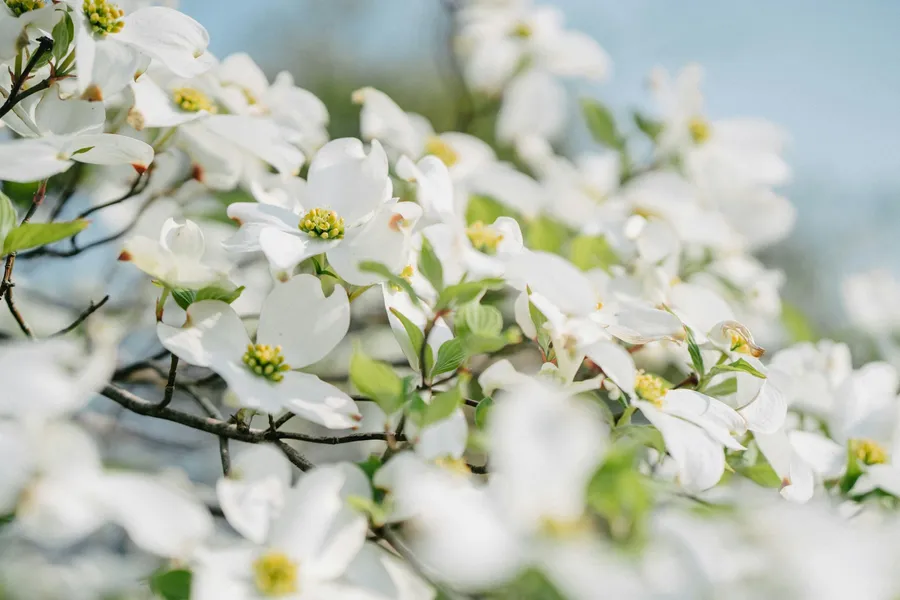
Virginia's dogwoods bloom in mid to late April, creating spectacular spring displays before most other trees leaf out. The showy white structures that people call flowers are actually modified leaves called bracts. The true flowers appear as small yellow-green clusters at the center of the bracts. This adaptation allows dogwoods to attract pollinators early in spring when few other food sources exist. The timing makes flowering dogwood one of the first significant nectar sources for Virginia's bees, butterflies, and other pollinators emerging from winter dormancy.
Virginia State Tree Name
The common name is Flowering Dogwood, though many Virginians simply call it dogwood. The scientific name is Cornus florida. Cornus is Latin for horn, referring to the wood's hardness and density. Florida means flowering, describing the tree's showy spring blooms. This species belongs to the Cornaceae family, the dogwood family.
The origin of the common name 'dogwood' remains debated. Some sources suggest it derives from 'dagwood,' referring to the wood's historical use for making sharp implements like skewers and arrows. Others trace it to 'dog-tree,' possibly because a decoction made from dogwood bark treated mange in dogs. Virginians have called this tree dogwood since colonial times, and the name appears in written accounts from the 1600s. North Carolina also claims the flowering dogwood as its state flower.
Why Flowering Dogwood Became the Virginia State Tree
Virginia recognized the Flowering Dogwood as its official state tree on February 28, 1956. The General Assembly passed House Joint Resolution No. 17 during the 1956 legislative session. Governor Thomas B. Stanley signed the resolution establishing the dogwood as Virginia's arboreal emblem. This designation came 38 years after Virginia adopted the dogwood flower as the state floral emblem in 1918.
Virginia chose flowering dogwood because the species already held deep significance in state culture. The 1918 adoption of dogwood blossoms as the state flower reflected Virginians' attachment to these spring blooms. Garden clubs, civic organizations, and conservation groups had promoted dogwood appreciation throughout Virginia for decades. The tree appeared prominently in Virginia literature, art, and tourism promotion. By the 1950s, dogwood had become inseparable from Virginia's landscape identity. Making it the official state tree formalized what Virginians already understood—the dogwood represented their state.
The tree's native status influenced the selection. Flowering dogwood evolved in Virginia's forests and grew naturally throughout the commonwealth. Virginia legislators wanted a state tree that belonged to Virginia's original landscape rather than an introduced species. The dogwood's manageable size made it familiar to most Virginians. Unlike tall forest trees that grew far from roads and homes, dogwoods grew in yards, parks, and along streets. Every Virginian could recognize and appreciate their state tree. This accessibility contributed to the dogwood's selection over larger, less visible forest species.
Virginia State Tree Facts
Fact 1 of 8
Virginia adopted Flowering Dogwood as state tree on February 28, 1956, through House Joint Resolution No. 17
Virginia State Tree and Flower
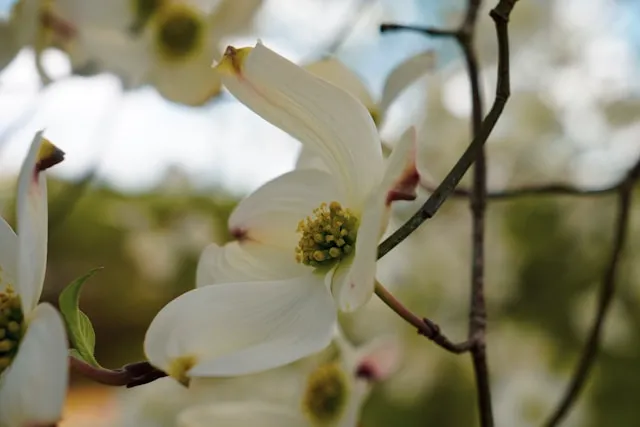
Virginia's state flower is the American Dogwood (Cornus florida), the same species as the state tree. Virginia adopted the dogwood blossom as its state flower in 1918, making it one of America's earliest state floral emblems. The General Assembly designated the entire tree as the state tree symbol in 1956. This unique arrangement means Virginia honors the same plant as both floral and arboreal symbol. The spring blossoms that made dogwood Virginia's flower choice bloom on the same trees that represent the state's forests. This dual designation reflects how completely the flowering dogwood pervades Virginia's landscape and culture. No other Virginia plant appears so prominently in both wild and cultivated settings throughout the commonwealth.
State Tree
Flowering Dogwood
State Flower
Dogwood
Learn more →
Both are official state symbols of Virginia.
How to Recognize a Virginia Flowering Dogwood
The bark creates a distinctive pattern that identifies dogwood even in winter. Mature bark breaks into small square or rectangular blocks, giving the trunk a checkered appearance similar to alligator hide. The bark color ranges from gray to reddish-brown. Young trees show smoother bark that develops the blocky pattern as trees age. This characteristic bark texture makes dogwood immediately recognizable among Virginia's native trees.
The flowers provide unmistakable spring identification. Four large white bracts surround a cluster of small yellow-green true flowers. Each bract measures two to four inches long with a distinctive notched tip. Some varieties produce pink bracts instead of white. The bracts open before leaves emerge, making flowering dogwoods highly visible against Virginia's still-brown forests in April. After pollination, the bracts fall and bright red berries develop by autumn. These clustered berries persist into winter, providing another identification feature.
The overall form shows horizontal branching that creates layered tiers of foliage. This growth pattern makes dogwoods distinctive even at a distance. Leaves grow opposite each other along the twigs. Each leaf measures three to six inches long with smooth edges and prominent curved veins that run parallel to the leaf margin. In autumn, leaves turn rich shades of red and purple before falling. The winter silhouette displays the characteristic horizontal branching structure with slightly upturned branch tips.
What the Virginia State Tree Symbolizes
The Flowering Dogwood symbolizes renewal and resilience in Virginia culture. Its early spring blooms represent hope and new beginnings after winter's dormancy. The tree's presence throughout Virginia—from mountain coves to coastal gardens—connects different regions of the commonwealth through shared natural beauty. For many Virginians, dogwood blossoms signal the arrival of spring more definitively than any calendar date. The tree's dual status as both flower and tree symbol reinforces its central place in Virginia's identity. Conservation efforts to protect dogwoods from disease threats reflect Virginia's commitment to preserving this living emblem for future generations.
Test Your Knowledge
Can you identify state flags? Challenge yourself with our interactive quiz!
Sources & References
This article has been researched using authoritative sources to ensure accuracy and reliability. All information has been fact-checked and verified against official government records and forestry databases.
Official source for Virginia state symbols and legislation • Accessed: January 15, 2026
Information about Virginia's forests and native trees • Accessed: January 15, 2026
Resources about Virginia's native plants including flowering dogwood • Accessed: January 15, 2026
Accuracy Commitment: We strive to maintain accurate and up-to-date information. If you notice any errors or outdated information, please contact us.