Kansas State Motto: Ad Astra per Aspera

US
Researched by USA Symbol Team

Fact-checked • Updated December 2, 2025

About Editor
Kansas State Seal

OFFICIAL STATE SEAL

Latin 1861

"Ad Astra per Aspera"

To the Stars Through Difficulties

About This Motto

Kansas adopted Ad Astra per Aspera (To the Stars Through Difficulties) on May 25, 1861. Latin phrase appears on state seal. Proposed by Senator John James Ingalls during first legislative session after statehood.

What the Motto Means

Ad Astra per Aspera translates to To the Stars Through Difficulties. Latin words carry direct meaning. Ad astra means to the stars. Per aspera means through difficulties or hardships. Together they express reaching great heights by enduring struggle.

What difficulties? Kansas territory saw violent conflict from 1854 to 1859. Pro-slavery and anti-slavery forces fought for control. Settlers faced attacks, arson, murder. This period earned the name Bleeding Kansas. More than 50 people died in political violence before statehood.

Pioneers wanted Kansas admitted as free state. They suffered for this goal. John James Ingalls captured their experience in five Latin words. Simple. Direct. Memorable.

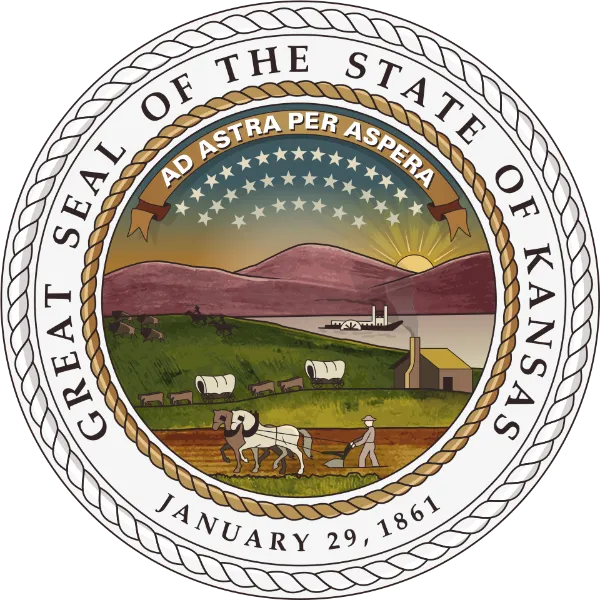
Motto appears on Great Seal of Kansas. Rising sun shows east. Steamboat travels river. Settler plows field with cabin behind. Buffalo retreat from Indians on horseback. 34 stars cluster below motto. Eagle holds scroll with Latin phrase. Design shows state building future while remembering struggle.

Historical Background

  1. Kansas Territory Created

    Federal law created Kansas Territory on May 30, 1854. New law changed existing rules. Popular sovereignty would determine slavery status. Meaning: settlers would vote. This reversed Missouri Compromise of 1820. Northern congressmen protested. Southern leaders celebrated. Violence followed quickly.

  2. Bleeding Kansas Period

    Pro-slavery Missourians crossed border during elections. They voted illegally to install pro-slavery legislature. Anti-slavery settlers refused to recognize this government. Two rival legislatures claimed authority. Clashes erupted. Lawrence burned in 1856. John Brown led Pottawatomie massacre, killing five pro-slavery settlers. More raids. More deaths. Federal troops couldn't stop the violence.

  3. Path to Statehood

    Kansas voters rejected pro-slavery Lecompton Constitution in 1858. They rejected it again later that year by vote of 11,300 to 1,788. Free-state forces drafted Wyandotte Constitution in 1859. Voters approved it October 4, 1859 by vote of 10,421 to 5,530. Document banned slavery. Congress delayed admission. Southern senators blocked the bill.

  4. Statehood Achieved

    Southern states began seceding in December 1860. Their senators left Congress. Kansas statehood bill finally passed. Senate approved January 21, 1861. House passed it January 28, 1861. President James Buchanan signed admission act January 29, 1861. Kansas became 34th state. Just four months before Civil War began.

  5. First Legislative Session

    New state legislature convened shortly after admission. Lawmakers needed official seal for government documents. Senate appointed three-member committee. Their job: design seal and suggest motto. Records don't name individual committee members. They worked fast. State needed functioning government immediately.

  6. John James Ingalls Proposes Design

    Ingalls served as state senator from Atchison. He also held position as Secretary of Kansas Senate. Committee asked him to submit design ideas. Ingalls proposed simple concept. Single star rising from clouds at base. Constellation of 34 stars above. Motto reading: Ad astra per aspera. Kansas would become 34th state.

  7. Source of the Motto

    Ingalls saw the phrase in 1857. He was reading law in Haverhill, Massachusetts. His instructor owned old brass seal with Latin motto inscribed. Words stuck in his mind. Four years later he remembered them. Ingalls later wrote the phrase seemed most melodious among similar expressions. Classical literature offered many variations. He picked the one that sounded best.

  8. Committee Modifies Design

    Legislature appointed joint committee to finalize seal. They liked Ingalls motto and star concept. But they added landscape elements. Committee incorporated mountain scene. River with steamboat. Buffalo chased by Indians. Settler with cabin and plow. Ox wagons heading west. Ingalls called these additions incongruous. He felt they destroyed simplicity. Committee ignored his objections.

  9. Motto Adopted May 25, 1861

    First Kansas Legislature adopted Great Seal by joint resolution May 25, 1861. Resolution described complete design. Rising sun in right corner. River and steamboat for commerce. Agriculture shown by cabin and plowing settler. Ox wagon train moving west. Buffalo and Indian hunters in background. Motto Ad astra per aspera around top. Cluster of 34 stars beneath. Circle surrounded by words: Great Seal of the State of Kansas January 29, 1861.

  10. Seal Specifications

    Resolution authorized Secretary of State to procure seal. Diameter: two inches. Legislature provided detailed written description. This description became part of Kansas statutes. Seal design hasn't changed since 1861. Same imagery appears on state flag adopted 1927.

Meaning & Significance Today

You find the motto everywhere in Kansas. State seal appears on driver's licenses. Official documents. Government buildings. Court opinions cite it during civil liberties cases. Legislature references it in debates about state sovereignty. Words from 1861 remain current in 2025.

Kansas flag displays the motto prominently. Hazel Avery designed flag in 1925. Legislature adopted it March 1927. Blue field carries state seal in center. Sunflower sits above seal on twisted bar. Motto curves around top of seal. Word Kansas appears below in gold letters. Simple design. Motto stands out.

Civil War connection adds depth. About 20,000 Kansans served in Union army. State had roughly 100,000 population at statehood. One in five adult men enlisted. Kansas contributed more soldiers per capita than any other state. Roughly 8,500 died or suffered wounds. They fought to preserve Union and end slavery. Motto captured their sacrifice.

Modern Kansans interpret motto broadly. Some emphasize perseverance through economic hardship. Others focus on educational achievement despite rural challenges. Agricultural community sees it as reflection of farming struggles against weather and markets. University of Kansas uses similar motto. Military units stationed in Kansas reference the phrase. Meaning adapts while words stay constant.

Cultural Context in Kansas

1861 Political Climate

Civil War began April 12, 1861. Kansas statehood came January 29, same year. Only months separated the events. Southern states seceded between December 1860 and June 1861. National unity collapsed. Kansas entered Union during crisis. Motto acknowledged this turbulent moment.

Free State Identity

Kansas banned slavery from first territorial legislature. Northwest Ordinance of 1787 prohibited slavery in region. Kansas Territory continued this policy. Wyandotte Constitution in 1859 made it explicit. Most Kansas settlers came from New England or Midwest free states. They opposed slavery on principle. Bloody Kansas violence strengthened their resolve.

Geographic Challenges

Kansas sits in Great Plains. Flat prairie stretched in all directions. Few trees. Little water in western regions. Harsh winters. Hot summers. Tornadoes. Droughts. Grasshopper plagues destroyed crops in 1874. Settlers endured extreme conditions. They built sod houses. Dug wells. Planted wheat. Motto spoke to their experience too.

Classical Education Context

Latin appeared in school curriculum in 1861. Educated Americans read Virgil. They studied Cicero. Classical references carried weight. State leaders understood Latin phrases. Citizens recognized prestige of Roman culture. This made Latin motto accessible to ruling class while sounding formal to general population.

Ingalls Later Career

Ingalls served as United States Senator from Kansas. Term lasted 1873 to 1891. Three full terms. He became known as orator and writer. Published essays and speeches. His reputation as writer started with motto choice. Simple phrase made lasting impact. Later generations credited him personally with creating motto. He designed it. Committee approved it.

Seal vs. Motto Distinction

Legislature never adopted motto separately. No standalone statute designated Ad astra per aspera as official motto apart from seal description. Motto exists only as seal element. Different from states with separate motto laws. Integration into seal made adoption automatic.

Current Law

State law governs seal design. State statute titled Great Seal of the State of Kansas contains complete description. Statute authorizes Secretary of State to procure seal two inches in diameter. Text describes rising sun, river, steamboat, agriculture scene, buffalo, Indians, ox wagons. Around top appears motto: Ad astra per aspera. Beneath motto sit cluster of 34 stars.

Legislature codified original 1861 resolution into permanent law on March 20, 1879. Law hasn't changed since then. Same description. Same design. No amendments to motto wording. State law requires written description be recorded in Secretary of State office. This description remains public record.

Interesting Facts About the Motto

Fact 1 of 16

John James Ingalls saw the phrase on a brass seal in Massachusetts in 1857.

Sources & References

This article has been researched using authoritative sources to ensure accuracy and reliability. All information has been fact-checked and verified against official government records.

1
Kansas Historical Society - Seal of Kansas
https://www.kansashistory.gov/kansapedia/seal-of-kansas/18266

Official historical documentation of Kansas seal design, adoption, and John James Ingalls's role. • Accessed: December 31, 2025

2
Wikipedia - Seal of Kansas
https://en.wikipedia.org/wiki/Seal_of_Kansas

Comprehensive history of seal design and motto adoption process. • Accessed: December 31, 2025

3
National Archives - Kansas Statehood
https://www.archives.gov/legislative/features/kansas

Federal records documenting Kansas admission to Union on January 29, 1861. • Accessed: December 31, 2025

4
Kansas State Legislature - State Statutes
http://www.kslegislature.org/li/b2021_22/statute/075_000_0000_chapter/075_002_0000_article/

Current Kansas law describing Great Seal including motto text. • Accessed: December 31, 2025

Accuracy Commitment: We strive to maintain accurate and up-to-date information. If you notice any errors or outdated information, please contact us.

Other Kansas Symbols

People Also Ask

What is Kansas's state motto?
Kansas's motto is 'Ad Astra per Aspera,' which translates to 'To the Stars Through Difficulties.'
When did Kansas adopt this motto?
The First Kansas Legislature adopted the motto on May 25, 1861, as part of the Great Seal design.
Who created Kansas's state motto?
John James Ingalls, a state senator from Atchison and Secretary of the Kansas Senate, proposed the motto.
What does 'Ad Astra per Aspera' mean?
It means 'To the Stars Through Difficulties' in Latin, expressing achievement through struggle.
When did Kansas become a state?
Kansas became the 34th state on January 29, 1861, just before the Civil War began.
Why did Kansas choose a Latin motto?
Latin carried formal prestige in 1861 America, and classical education made Latin phrases familiar to educated citizens.
What is Bleeding Kansas?
Bleeding Kansas refers to violent conflict from 1854 to 1859 between pro-slavery and anti-slavery forces in Kansas Territory.
Has Kansas officially adopted the motto separately from the seal?
No. The motto exists only within the state seal description in state law.
Where does the motto appear today?
The motto appears on the state seal, state flag, official documents, and driver's licenses.
Where did Ingalls first see this phrase?
Ingalls saw it on an old brass seal in Haverhill, Massachusetts in 1857 while reading law.
What inspired the motto's creation?
Kansas territorial struggles with slavery conflict and violence inspired choosing a motto about achieving goals through hardship.
Who designed the Kansas flag?
Hazel Avery designed the Kansas flag in 1925, and the legislature adopted it in 1927.