North Carolina State Motto: Esse Quam Videri

US
Researched by USA Symbol Team

Fact-checked • Updated December 4, 2025

About Editor
North Carolina State Seal

OFFICIAL STATE SEAL

Latin 1893

"Esse Quam Videri"

To Be Rather Than to Seem

About This Motto

North Carolina adopted Esse Quam Videri on February 21, 1893, as state motto. Latin phrase translates to To Be Rather Than to Seem. Judge Walter Clark selected phrase and drafted legislation. Senator Jacob Battle introduced bill to General Assembly. North Carolina became 12th state November 21, 1789.

What the Motto Means

Esse Quam Videri translates to To Be Rather Than to Seem. Latin phrase comes from Cicero's essay De Amicitia, written 44 BC. Full sentence reads: Virtute enim ipsa non tam multi praediti esse quam videri volunt. Translation: Few wish to be endowed with virtue rather than to seem so. Authentic character trumps mere appearance. Being genuine matters more than seeming genuine.

Why this phrase? Walter Clark wanted motto promoting authenticity and integrity. Cicero's philosophy suited North Carolina values. Similar sentiments appear in writings by Greek philosopher Aeschylus and playwright Euripides. Ancient concept had universal appeal. Clark found Latin gave motto classical weight and permanence. Most U.S. states chose Latin for official mottoes.

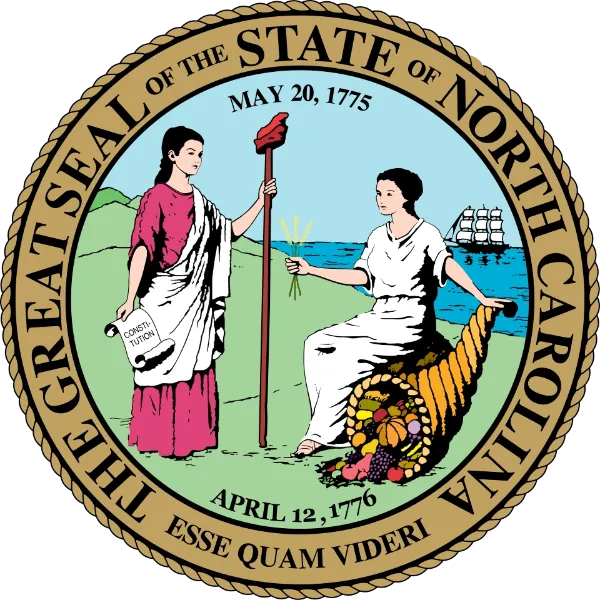
Motto appears on state seal below coat of arms. The design places phrase prominently at bottom. Black letters spell words on white background. Date May 20, 1775 appears at top, referencing Mecklenburg Declaration of Independence. Two female figures flank shield. Liberty holds pole with cap. Plenty holds cornucopia. Latin inscription curves along bottom edge.

Legislature never adopted Esse Quam Videri as standalone motto separate from seal statute. Phrase exists within Great Seal description. Law directed that motto be engraved on seal and placed at foot of coat of arms. Technical integration made adoption automatic. State uses motto on official documents, seals, and publications. Functions as de facto state motto despite statutory placement.

Historical Background

  1. Last of Original Thirteen

    North Carolina was last of original thirteen colonies to adopt state motto. The state waited 104 years after statehood before selecting phrase. Other original states adopted mottoes earlier. Virginia chose Sic Semper Tyrannis in 1776. Massachusetts adopted Ense Petit Placidam Sub Libertate Quietem in 1775. North Carolina focused on other state symbols first. Delay reflected deliberative approach to selecting appropriate phrase.

  2. Walter Clark's Role

    Walter Clark served as superior court judge starting 1885. Appointed to North Carolina Supreme Court 1889. Rose to Chief Justice 1902, serving until death 1924. Born August 19, 1846 in Halifax County. Served Confederate Army during Civil War at age 14. Graduated University of North Carolina 1864. Studied law at Columbia University. Clark compiled sixteen-volume State Records of North Carolina between 1886-1897. Edited five-volume Civil War regimental histories. Selected Esse Quam Videri for state motto in 1893.

  3. Legislative Process 1893

    Clark drafted bill establishing state motto early 1893. Senator Jacob Battle of Nash County introduced legislation to General Assembly. Legislature debated proposal during 1893 session. No recorded opposition to motto selection. Assembly passed bill directing that Esse Quam Videri be engraved on Great Seal and placed at foot of coat of arms. Governor ratified legislation February 21, 1893. Law also specified date May 20, 1775 appear on coat of arms top.

  4. Statehood November 21, 1789

    North Carolina became 12th state when ratifying U.S. Constitution November 21, 1789. State initially rejected Constitution at Hillsborough convention July 1788. Delegates demanded Bill of Rights before ratification. Second convention met Fayetteville November 1789. George Washington's election and promised amendments changed opinion. Final vote approved Constitution 194 to 77. Only Rhode Island ratified later than North Carolina among original states.

Meaning & Significance Today

Motto appears on North Carolina Great Seal and state coat of arms. Secretary of State maintains custody of official seal. Seal authenticates government documents and commissions. Design features two female figures flanking shield. Liberty stands left holding pole with cap. Plenty stands right holding cornucopia. Ships sail on water within shield. Latin motto curves along bottom. Date May 20, 1775 inscribed at top.

State agencies display motto prominently on letterhead and publications. Courts reference phrase in opinions about character and integrity. Universities incorporate motto into educational programs. Students learn about Cicero and classical philosophy. History classes cover 1893 adoption and Walter Clark's contribution. The phrase encourages honest behavior and authentic living.

Esse Quam Videri entered popular culture beyond government usage. Many North Carolina schools and organizations adopt phrase as institutional motto. Businesses reference concept in marketing authentic products and services. The motto appears on monuments including Joseph Winston Monument and Guilford Courthouse. Stephen Colbert parodied motto on fireplace display reading Videri Quam Esse, reversing meaning to seem rather than be.

Modern interpretation focuses on authenticity and genuine character. The phrase challenges residents to prioritize substance over appearance. In age of social media performance, motto gains renewed relevance. North Carolinians cite phrase when discussing integrity and honest dealings. Latin words continue guiding state identity 130 years after adoption.

Cultural Context in North Carolina

1890s Political Climate

Legislature adopted motto during period of Democratic Party dominance. White Democrats controlled state government following Reconstruction. Constitutional convention met 1835 reforming earlier document. New constitution introduced direct election of governor. Poll taxes and literacy tests restricted voting by 1899. Motto adoption occurred amid these political changes. Walter Clark's progressive views contrasted with conservative legislature on some issues.

Civil War Legacy

Walter Clark served Confederate Army as teenager during Civil War. Fought at Antietam and Fredericksburg with 35th North Carolina Regiment. War experience shaped his later historical work. Clark edited regimental histories emphasizing Confederate soldier valor. His writings promoted Lost Cause narrative prevalent in 1890s South. Motto selection reflected values of post-war generation seeking to rebuild state identity.

Classical Education Tradition

Latin remained core curriculum in 19th century North Carolina schools. Students memorized Cicero and other Roman authors. Classical education marked gentleman's training. Walter Clark studied Latin at university before Civil War. Familiarity with Cicero made De Amicitia natural source. Other Southern states also chose Latin mottoes. Virginia, South Carolina, Maryland used classical phrases. Shared educational tradition connected states.

Tar Heel Identity

Motto aligned with North Carolina's self-image as Tar Heel State. Nickname arose from Revolutionary War or Civil War depending on account. Most popular explanation credits North Carolina troops holding position when other regiments retreated. Legend claims soldiers stood ground literally and figuratively. Esse Quam Videri philosophy matched reputation for steadfastness. Being rather than seeming reflected state pride in substance over show.

May 20, 1775 Date

Legislation required date May 20, 1775 appear on coat of arms alongside motto. Date references Mecklenburg Declaration of Independence allegedly signed Charlotte that day. Document supposedly declared independence from Britain year before national Declaration. Historians debate whether declaration actually occurred. No original copy exists. Story became important part of North Carolina mythology. Including date on seal elevated event to official recognition.

Current Law

North Carolina statute describes state motto within Great Seal provisions. Law states words Esse Quam Videri are hereby adopted as motto of state. Statute directs motto be engraved on Great Seal and placed at foot of coat of arms. Law also requires date May 20, 1775 inscribed at top of coat of arms. Secretary of State maintains seal custody and authorizes official uses.

Original legislation passed February 21, 1893 during regular General Assembly session. Law remains unchanged since adoption. Motto exists as element of seal rather than standalone statute. Integration into seal description provides legal foundation. Courts cite motto occasionally in opinions discussing character and authenticity. State treats phrase as official motto despite technical placement within seal statute.

Interesting Facts About the Motto

Fact 1 of 15

North Carolina was the last of the original thirteen states to adopt a state motto in 1893.

Sources & References

This article has been researched using authoritative sources to ensure accuracy and reliability. All information has been fact-checked and verified against official government records.

1
North Carolina History - Esse Quam Videri
https://northcarolinahistory.org/encyclopedia/esse-quam-videri/

Details on Walter Clark, Senator Jacob Battle, and legislative process for motto adoption. • Accessed: December 31, 2025

2
NC Department of Natural and Cultural Resources
https://www.dncr.nc.gov/blog/2016/02/21/classical-origins-states-motto

Classical origins of motto, Cicero's De Amicitia, and ancient Greek precedents. • Accessed: December 31, 2025

3
Wikipedia - Esse Quam Videri
https://en.wikipedia.org/wiki/Esse_quam_videri

Broader usage of phrase, historical context, and appearances in literature and culture. • Accessed: December 31, 2025

Accuracy Commitment: We strive to maintain accurate and up-to-date information. If you notice any errors or outdated information, please contact us.

Other North Carolina Symbols

People Also Ask

What is North Carolina's state motto?
North Carolina's state motto is Esse Quam Videri, which translates to To Be Rather Than to Seem in English.
When did North Carolina adopt this motto?
The General Assembly adopted the motto on February 21, 1893.
Who selected North Carolina's motto?
Judge Walter Clark, a North Carolina Supreme Court justice and historian, selected the phrase and drafted the legislation.
What does Esse Quam Videri mean?
It means To Be Rather Than to Seem in Latin, emphasizing authenticity and substance over mere appearance.
When did North Carolina become a state?
North Carolina became the 12th state on November 21, 1789, when it ratified the U.S. Constitution.
Where does the motto come from?
The phrase comes from Cicero's essay De Amicitia (On Friendship), written in 44 BC, though similar concepts appear in earlier Greek writings.
Why was North Carolina the last original state to adopt a motto?
North Carolina waited 104 years after statehood before selecting a motto, reflecting a deliberative approach to choosing an appropriate phrase.
Who introduced the motto legislation?
Senator Jacob Battle of Nash County introduced the bill to the General Assembly in 1893.
Where does the motto appear?
The motto appears on the state Great Seal and coat of arms, placed at the bottom below the shield.
Is the motto officially adopted?
Yes, the motto was officially adopted as part of the Great Seal statute in 1893 and remains in effect today.