New Mexico State Tree: Piñon Pine
Fact-checked • Updated January 15, 2025
New Mexico State Tree – Piñon Pine
Piñon Pine stands as New Mexico's state tree, adopted in 1949 to honor a species deeply woven into the state's culture and landscape. This small evergreen grows 10 to 20 feet tall across New Mexico's high desert mountains, producing edible pine nuts that have sustained Native American peoples for millennia. The tree defines New Mexico's characteristic piñon-juniper woodland that covers millions of acres across the state. Piñon pine's sweet-smelling smoke, nutritious nuts, and drought tolerance made it sacred to Pueblo peoples and essential to New Mexico's identity long before statehood.
What Is the New Mexico State Tree?
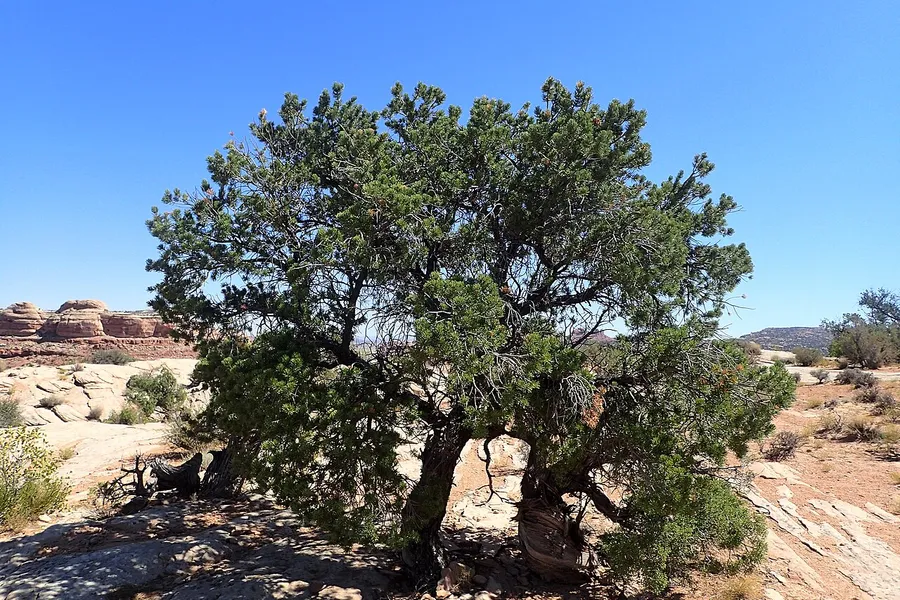
New Mexico's official state tree is the Piñon Pine, specifically the Two-needle Piñon. This small evergreen conifer grows 10 to 20 feet tall in New Mexico's high desert, rarely exceeding 30 feet even in favorable conditions. The trunk measures one to two feet in diameter on mature trees. Unlike towering forest pines, piñon remains small and often develops multiple trunks creating a shrubby, rounded form. This compact growth helps the tree survive New Mexico's extreme climate with minimal water. Piñon pines grow slowly, adding only a few inches annually, but can live 500 to 1,000 years. The tree's greatest value comes not from timber but from pine nuts - the large edible seeds that provided a dietary staple for New Mexico's indigenous peoples and remain culturally significant today.
The needles grow in bundles of two, each needle measuring one to two inches long. The paired needles appear stiff, curved, and dark yellow-green to blue-green. This two-needle arrangement distinguishes New Mexico's piñon from Nevada's Single-leaf Pinyon which has solitary needles. The needles stay on the tree for three to nine years before dropping, giving piñon a dense, bushy appearance. The bark appears reddish-brown to gray with irregular furrows and scaly ridges. Small rounded cones measure one to two inches across and produce large wingless seeds - the pine nuts. Each nut measures one-half to three-quarters inch long with a hard shell enclosing rich, oily meat.
Piñon Pine grows throughout New Mexico's mountains and high plateaus at elevations from 5,000 to 7,500 feet. The species dominates the piñon-juniper woodland zone that covers roughly 7 million acres across New Mexico - about one-tenth of the entire state. These woodlands form the most extensive plant community across New Mexico's landscape. The tree grows on rocky slopes, mesas, and canyons where few other trees survive. Piñon tolerates New Mexico's extreme temperature swings from summer heat exceeding 100°F to winter cold below zero. The species requires minimal rainfall - 12 to 20 inches annually. This drought tolerance allows piñon to thrive in New Mexico's arid climate. The tree grows in pure piñon stands and mixed with one-seed juniper in the characteristic piñon-juniper woodlands that define New Mexico's high desert environment.
New Mexico State Tree Name
The official name is Piñon Pine, with piñon derived from Spanish for pine nut. New Mexicans pronounce it 'PIN-yon' and spell it various ways - piñon with tilde, pinon without, or pinyon. The scientific name Pinus edulis combines Pinus (Latin for pine) with edulis (Latin for edible), directly referencing the edible nuts. The name Two-needle Piñon distinguishes this species from single-needle and other piñon species. New Mexico's Spanish heritage shows in the retained Spanish name rather than an anglicized version.
Pueblo peoples had various names in their languages - Tewa speakers called it kʼu, Keres speakers called it shi. Early Anglo settlers called them nut pines. Some references use Colorado piñon since the species grows abundantly in both states. The species belongs to the Pinaceae family. Two-needle Piñon grows only in the southwestern United States - New Mexico, Colorado, Arizona, Utah, and small areas of Wyoming, Nevada, and Oklahoma. New Mexico contains more piñon woodland than any other state, making this tree quintessentially New Mexican despite its range extending to neighboring states.
Why Piñon Pine Became the New Mexico State Tree
New Mexico adopted the Piñon Pine as its official state tree on March 16, 1949. The New Mexico Legislature passed House Joint Memorial 1 during the 1949 session. The designation came just 37 years after New Mexico achieved statehood in 1912. The selection honored a tree that predated European arrival by thousands of years and held sacred significance for New Mexico's Pueblo peoples. Unlike many state tree selections driven by timber value, New Mexico chose piñon for its cultural importance and symbolic meaning rather than economic worth.
New Mexico picked Piñon Pine because it represents the state's distinctive high desert landscape and Native American heritage. The piñon-juniper woodland covers more of New Mexico than any other plant community, creating the characteristic appearance of New Mexico's mountains and plateaus. The tree grows naturally across most of New Mexico where human settlement occurs - the areas between low desert basins and high mountain forests. For New Mexico's 19 Pueblo communities, piñon holds spiritual significance. The tree provided pine nuts that constituted up to 25 percent of calories in traditional Pueblo diets. Good piñon harvests meant prosperity, while crop failures brought hardship.
The tree shaped New Mexico's economy and culture for centuries. Archaeological evidence shows Ancestral Puebloans harvested piñon nuts at least 10,000 years ago in New Mexico. Spanish colonists learned to harvest pine nuts from Pueblo peoples and integrated them into New Mexican cuisine. Piñon nuts remain a prized food in New Mexico today, though most commercial pine nuts now come from other species. Piñon wood provides aromatic firewood prized across the Southwest - the sweet smoke scents New Mexico neighborhoods during winter. The wood was traditionally used for vigas (roof beams) in Pueblo and Spanish colonial architecture. New Mexican artists use piñon wood for carvings and crafts. The tree appears frequently in New Mexico art, literature, and music as a symbol of the high desert homeland. The combination of deep cultural roots, sacred significance to Pueblo peoples, practical uses, and dominance across New Mexico's landscape made Piñon Pine the inevitable choice for state tree. The species represents New Mexico's unique position where Native American, Spanish, and Anglo cultures merged in a distinctive high desert environment found nowhere else.
New Mexico State Tree Facts
Fact 1 of 8
New Mexico adopted Piñon Pine on March 16, 1949, just 37 years after achieving statehood in 1912
New Mexico State Tree and Flower
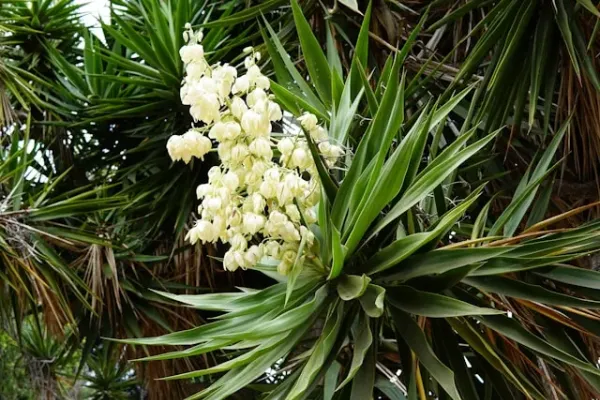
New Mexico's state flower is the Yucca (Yucca glauca), designated in 1927. The state adopted its floral symbol 22 years before choosing piñon pine. Both symbols represent New Mexico's high desert environment and Native American heritage. The yucca grows on lower elevation plains and grasslands, while piñon dominates higher mountain slopes. Yucca blooms with tall white flower stalks in late spring as piñon cones begin developing. Together these symbols capture New Mexico's distinctive Southwestern landscape from desert grasslands to piñon-covered mountains. Both plants provided food and materials to Pueblo peoples - yucca roots for soap and fiber, piñon nuts for sustenance.
State Tree
Pinyon Pine
State Flower
Yucca Flower
Learn more →
Both are official state symbols of New Mexico.
How to Recognize a New Mexico Piñon Pine
Count the needles in each bundle for certain identification. Piñon Pine produces two needles per bundle, distinguishing it from other southwestern pines. Each needle measures one to two inches long and appears stiff, curved, and yellow-green to blue-green. The paired needles grow in clusters along the twigs. This two-needle arrangement separates New Mexico's piñon from single-needle species and from three-needle ponderosa pine that also grows in New Mexico. The short, paired needles provide reliable identification even from a distance.
The overall form shows a small, often multi-trunked tree with a rounded, bushy crown. Piñon rarely grows tall and straight like forest pines. Instead, the crown spreads nearly as wide as the tree is tall, creating a rounded or irregular silhouette. The bark appears reddish-brown to gray with shallow furrows and scaly plates. Branches grow irregularly, creating a gnarled appearance on old specimens. The small size immediately distinguishes piñon from larger pines like ponderosa that tower 60 to 100 feet tall.
The cones and nuts provide another identification feature. Look for small, rounded cones measuring one to two inches across. The cones appear almost spherical rather than elongated. They start green and mature to brown over two years. When ripe, the cones open to reveal large brown seeds without wings. These are the pine nuts - much larger and meatier than most pine seeds. Good cone years transform piñon trees, with branches covered in cones. Piñon jays and other wildlife flock to New Mexico piñons during nut harvests. The sweet, resinous smell of piñon wood identifies the species even without seeing the tree - the distinctive fragrance fills New Mexico air when piñon fires burn on cold evenings.
What the New Mexico State Tree Symbolizes
Piñon Pine embodies New Mexico's cultural fusion of Native American, Spanish, and Anglo traditions. The tree symbolizes sustenance and survival in an arid landscape where resources require careful use. For Pueblo peoples, piñon represents connection to ancestral lands and traditional ways. The annual pine nut harvest continues to hold spiritual and cultural significance for New Mexico's Native communities. For all New Mexicans, the sweet smell of piñon smoke evokes home and heritage. The tree's presence across New Mexico's mountains creates the landscape that defines the Land of Enchantment. Piñon represents New Mexico's unique high desert environment, ancient cultures, and the resilience required to thrive where heat, cold, and drought challenge all life.
Test Your Knowledge
Can you identify state flags? Challenge yourself with our interactive quiz!
Sources & References
This article has been researched using authoritative sources to ensure accuracy and reliability. All information has been fact-checked and verified against official government records and forestry databases.
Official source for New Mexico state symbols and legislation • Accessed: January 15, 2026
Information about New Mexico's forests and native trees • Accessed: January 15, 2026
Educational resources about New Mexico trees and ecology • Accessed: January 15, 2026
Accuracy Commitment: We strive to maintain accurate and up-to-date information. If you notice any errors or outdated information, please contact us.