Minnesota State Motto: L'Étoile du Nord

US
Researched by USA Symbol Team

Fact-checked • Updated December 2, 2025

About Editor
Minnesota State Seal

OFFICIAL STATE SEAL

French 1861

"L'Étoile du Nord"

The Star of the North

About This Motto

Minnesota adopted L'Étoile du Nord on March 5, 1861. French phrase translates to The Star of the North. Only U.S. state motto in French language. Governor Henry Hastings Sibley chose phrase for state seal. Minnesota became 32nd state May 11, 1858.

What the Motto Means

L'Étoile du Nord translates to The Star of the North. French phrase refers to Polaris, the North Star. Navigators used North Star for centuries to find direction. Star remains fixed in northern sky while other stars rotate around it. Constellation Ursa Minor, also called Little Dipper, contains Polaris at tip of handle.

Why French? Minnesota's early European settlement involved French-Canadian fur traders called voyageurs. They paddled canoes through lakes and rivers transporting pelts. Jesuit missionaries from France established early posts. French influence shaped territorial culture and commerce. Governor Henry Sibley worked in fur trade for American Fur Company. He chose French motto to honor this heritage.

Geographic meaning fits Minnesota perfectly. State sits at northernmost point of contiguous United States. Northwest Angle extends above 49th parallel into Lake of the Woods. Minnesota was northernmost section of Northwest Territory. Motto emphasizes location and frontier position. North Star guided explorers and settlers traveling through territory.

Sibley incorporated motto into state seal design in 1858 without legislative approval. He replaced territorial seal's Latin motto. Original phrase read: Quo sursum velo videre. Translation: I want to see what lies beyond. Latin contained spelling error (velo should have been volo). Sibley chose cleaner French phrase instead. Legislature formally adopted new seal design March 5, 1861.

Historical Background

  1. Minnesota Territory Organized

    Congress created Minnesota Territory March 3, 1849. Territory carved from land ceded by Iowa after statehood. Wisconsin achieved statehood 1848, leaving unorganized territory. Minnesota Territory initially included present-day Minnesota plus eastern portions of Dakota Territory. Henry Sibley served as territorial delegate to Congress. He pushed for territorial organization and secured passage of enabling legislation. St. Paul became territorial capital.

  2. Henry Hastings Sibley Background

    Henry Sibley born February 20, 1811 in Detroit, Michigan. Father Solomon Sibley served as Michigan Supreme Court Chief Justice. Henry attended Detroit Academy and studied law briefly. Joined American Fur Company at age 18. Worked as purchasing agent on Mackinac Island five years. Became company partner 1834. Moved to Mendota, Minnesota Territory that year. Managed fur trading operations with Dakota tribes.

  3. Sibley's Fur Trade Career

    Sibley established trading post at Mendota, near Fort Snelling. Learned Dakota language fluently. Dakota gave him name Wah-pe-ton Houska, meaning the tall trader. Built stone warehouse and residence that served as business headquarters. Traded with Dakota, Ojibwe, and other tribes across the Upper Mississippi Valley. Worked with French-Canadian voyageurs who transported furs by canoe. His business partners included Hercules Dousman and Joseph Rolette. American Fur Company collapsed 1842. Sibley liquidated holdings and invested in land.

  4. Political Career Begins

    Sibley entered politics 1848 at Stillwater Convention. Elected delegate to Congress from Wisconsin Territory. Successfully lobbied for Minnesota Territory creation. Served as Minnesota territorial delegate 1849-1853. Represented fur traders during treaty negotiations with Dakota tribes. Treaties of Traverse des Sioux and Mendota signed 1851. Ceded most Dakota land to federal government. Sibley elected to territorial legislature 1855 from Dakota County.

  5. Constitutional Convention 1857

    Minnesota held constitutional convention summer 1857. Territory's population exceeded 150,000 residents. Democrats and Republicans met separately due to partisan divisions. Sibley served as president of Democratic wing. Convention drafted state constitution. Document completed and approved October 1857. Minnesota applied for statehood with constitution ready. Congress approved admission after brief delay.

  6. Statehood May 11, 1858

    President James Buchanan signed Minnesota statehood act. Minnesota admitted to Union May 11, 1858 as 32nd state. Sibley and Alexander Ramsey both ran for governor. Sibley won by narrow margin of 240 votes. Sworn in as first state governor May 24, 1858. Minnesota entered as free state. Slavery prohibited under Northwest Ordinance. State faced immediate challenges including railroad financing and school land sales.

  7. Seal Design Controversy 1858

    Minnesota statehood act required official state seal. Secretary of State Francis Baasen wrote Sibley requesting direction. Sibley authorized temporary use of territorial seal. He began making design changes without legislative consultation. Replaced territorial Latin motto with French phrase. Changed sun from rising in east to setting in west. Added text around edge: The Great Seal of the State of Minnesota 1858. Critics attacked Sibley for overstepping authority. Newspapers called action presumptuous.

  8. Legislature Adopted Seal March 5, 1861

    Legislature convened for 1861 session. Lawmakers needed to formalize state seal design. Sibley's 1858 unauthorized design had been in use three years. Legislature passed law describing official seal. Text specified all design elements including motto. Latin phrase Quo sursum velo videre removed. French motto L'Étoile du Nord made official. Law adopted March 5, 1861. Sibley's controversial design received retroactive approval.

  9. Sibley's Later Career

    Sibley chose not to run for reelection 1860. Alexander Ramsey succeeded him as governor. Dakota War erupted August 1862. Governor Ramsey commissioned Sibley to lead military response. Sibley commanded volunteer forces against Dakota warriors. Campaign culminated in Battle of Wood Lake September 23, 1862. Victory secured release of hostages. Military commission tried Dakota prisoners. President Lincoln commuted most death sentences. 38 Dakota men executed December 26, 1862. Largest mass execution in U.S. history. Sibley promoted to brigadier general.

Meaning & Significance Today

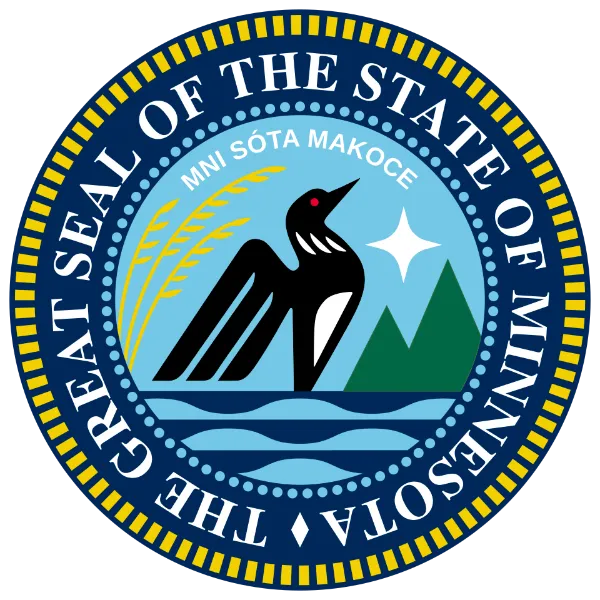
Motto appears on Minnesota state seal and flag. Seal shows farmer plowing field. Native American rides horse in background. Sun sets over landscape. French phrase curves on banner below image. State flag adopted 1893 featured seal on white field. Flag redesigned 2024 but motto continued as verbal tradition.

North Star State became unofficial nickname. Minnesota's professional hockey team used English translation. Minnesota North Stars played 1967-1993 before relocating to Dallas. Team name directly referenced state motto. Capitol building in St. Paul features eight-pointed star in its architecture. Stars appear in ceiling of Great Hall. Floor displays star patterns. Each point pair forms letter M for Minnesota.

Northernmost geography remains accurate. Northwest Angle extends to 49°23'N latitude. Most northern point in Lower 48 states except small section of northern Idaho. Minnesota touches Canadian border at multiple points. Lake of the Woods, Rainy River, and Pigeon River form northern boundary. State's position validates motto choice made in 1861. Geographic description stays true 164 years later.

French-Canadian heritage persists in place names. Voyageurs National Park honors fur traders. Lac qui Parle, Mille Lacs, Bois de Sioux preserve French names. Ste. Genevieve, Frontenac, Nicollet County carry French origin. Modern Minnesota recognizes multicultural roots. Motto serves as reminder of French contribution to state history. Only French state motto in entire United States keeps unique linguistic heritage alive.

Cultural Context in Minnesota

Fur Trade Era

Fur trade dominated Minnesota economy from the 1660s through 1840s. French voyageurs paddled birchbark canoes through lake chains, transporting beaver pelts, otter, mink, and muskrat from the interior. Hudson's Bay Company operated from the north while American Fur Company controlled southern regions, with Sibley managing the Western Outfit. Trading posts dotted the Mississippi, Minnesota, and St. Croix Rivers, with Mendota, Pembina, and Grand Portage serving as major centers. Fur trade decline in the 1840s pushed the territory toward agriculture and settlement.

French-Canadian Voyageurs

Voyageurs worked as contract paddlers for fur companies, most coming from Quebec and Montreal regions where French was their primary language. They lived harsh lives transporting goods and furs along routes covering thousands of miles each season. Grand Portage on Lake Superior served as a major depot where annual rendezvous brought traders together. French songs, customs, and food traditions spread across the territory as voyageurs often married Native American women, creating mixed-blood communities that developed at trading posts. Their descendants populated early Minnesota settlements.

Native American Treaties

Dakota and Ojibwe tribes controlled Minnesota lands before treaties forced their cession. Sibley participated in treaty negotiations as fur trader representative when the Treaties of Traverse des Sioux and Mendota were signed in summer 1851. Dakota ceded 24 million acres for cash and annuities, then moved to a narrow reservation along the Minnesota River. Treaty payments were often delayed or mishandled, and starvation and desperation led to the Dakota War in 1862. The conflict killed hundreds of settlers and soldiers before the government expelled Dakota from Minnesota. Sibley's role in both the treaties and military response remains controversial.

Northwest Territory Legacy

Northwest Ordinance of 1787 organized the territory north of the Ohio River, prohibiting slavery across the entire region and setting the process for territories becoming states. It required 60,000 residents for statehood eligibility. Minnesota was carved from the northwest section of this original territory, making its northernmost location appropriate for the Star of the North motto. The territory extended from the Great Lakes to the Missouri River, and Minnesota's admission completed organization of Northwest Ordinance lands east of the Missouri.

1861 Adoption Timing

Legislature adopted the motto on March 5, 1861, just five weeks before the Civil War began on April 12, 1861. Minnesota contributed troops to the Union cause, with the First Minnesota Infantry Regiment distinguishing itself at Gettysburg by suffering 82 percent casualties during a desperate charge on July 2, 1863. The state sent 24,000 men to war after Governor Alexander Ramsey promptly pledged support to Lincoln. Minnesota's northern position kept it distant from major battles, though the Dakota War in 1862 diverted troops and attention westward.

Seal Redesign 2024

Legislature passed a law in 2023 creating a commission to redesign the state seal and flag. Critics viewed the original seal imagery as offensive to Native Americans because it showed a Native American riding away while a settler plowed the land, suggesting Native displacement. The new seal was adopted on May 11, 2024, the statehood anniversary, featuring a loon, pines, North Star, and the Dakota phrase Mni Sóta Makoce (Land Where the Waters Reflect the Skies). The French motto was removed from the new seal design, though the phrase continues as the official verbal motto in state law.

Current Law

Minnesota Statutes govern state motto. Statute designates L'Étoile du Nord as official motto. French phrase adopted through seal legislation passed March 5, 1861. Original law described complete seal design. Text specified motto placement on banner below scene. Legislature revised seal statute multiple times. 1971 revision reaffirmed motto. 2024 redesign separated seal from motto.

New law maintains L'Étoile du Nord as verbal motto. Phrase no longer appears on redesigned seal. Statute preserves French phrase as official state motto independent of seal imagery. Legislature kept motto while changing visual design. Decision honors historical tradition while updating controversial elements. French phrase remains Minnesota's unique linguistic heritage marker among fifty states.

Interesting Facts About the Motto

Fact 1 of 16

Minnesota is the only U.S. state with a motto in French.

Sources & References

This article has been researched using authoritative sources to ensure accuracy and reliability. All information has been fact-checked and verified against official government records.

1
Wikipedia - L'Étoile du Nord
https://en.wikipedia.org/wiki/L'%C3%89toile_du_Nord

Comprehensive history of Minnesota's motto, Henry Sibley's selection, and adoption timeline. • Accessed: December 31, 2025

2
Minnesota Secretary of State - State Motto
https://www.sos.mn.gov/about-minnesota/state-symbols/state-motto-l-etoile-du-nord/

Official state documentation of motto meaning, translation, and current legal status. • Accessed: December 31, 2025

3
Minnesota Historical Society - Historic State Seal
https://www.sos.mn.gov/about-minnesota/minnesota-in-profile/historic-state-seal/

Official history of seal design changes, Sibley's unauthorized 1858 design, and 1861 legislative adoption. • Accessed: December 31, 2025

4
Wikipedia - Henry Hastings Sibley
https://en.wikipedia.org/wiki/Henry_Hastings_Sibley

Complete biography of Sibley including his fur trading operations, political career, and military service during Dakota War. • Accessed: December 31, 2025

Accuracy Commitment: We strive to maintain accurate and up-to-date information. If you notice any errors or outdated information, please contact us.

Other Minnesota Symbols

People Also Ask

What is Minnesota's state motto?
Minnesota's motto is 'L'Étoile du Nord,' which translates to 'The Star of the North' in English.
When did Minnesota adopt this motto?
The legislature formally adopted the motto on March 5, 1861, though Governor Sibley included it on the seal in 1858.
Who chose Minnesota's state motto?
Henry Hastings Sibley, Minnesota's first governor and former fur trader, chose the French phrase.
Why is Minnesota's motto in French?
The French motto honors the French-Canadian voyageurs and fur traders who played a major role in Minnesota's early history.
What does 'L'Étoile du Nord' mean?
It means 'The Star of the North' and refers to Polaris, the North Star used for navigation.
When did Minnesota become a state?
Minnesota became the 32nd state on May 11, 1858.
Is Minnesota the only state with a French motto?
Yes, Minnesota is the only U.S. state to have an official motto in the French language.
What was Minnesota's territorial motto?
The territorial motto was 'Quo sursum velo videre' (I want to see what lies beyond), which contained a spelling error.
Where does the motto appear today?
The motto appears as Minnesota's official verbal motto in state law, though the 2024 seal redesign removed it from the visual seal.
What is the North Star?
The North Star is Polaris, located in the constellation Ursa Minor (Little Dipper), which guided navigation for centuries.
Why did Sibley choose this particular phrase?
Sibley chose it to honor French-Canadian heritage and to emphasize Minnesota's position as the northernmost state at the time.
What happened to the old state seal?
The original seal was retired on May 11, 2024, and replaced with a new design that removed the motto from visual imagery but kept it as verbal tradition.