Maryland State Tree: White Oak
Fact-checked • Updated January 15, 2025
Maryland State Tree – White Oak
White Oak stands as Maryland's official state tree, recognized by the state legislature in 1941. The tree played a vital role in Maryland's colonial shipbuilding industry and grows abundantly across the state. These massive oaks reach heights of 80 to 100 feet with trunks measuring three to four feet in diameter. Maryland's White Oak designation honors both the tree's historical importance to the state's economy and its continued presence in Maryland forests today.
What Is the Maryland State Tree?
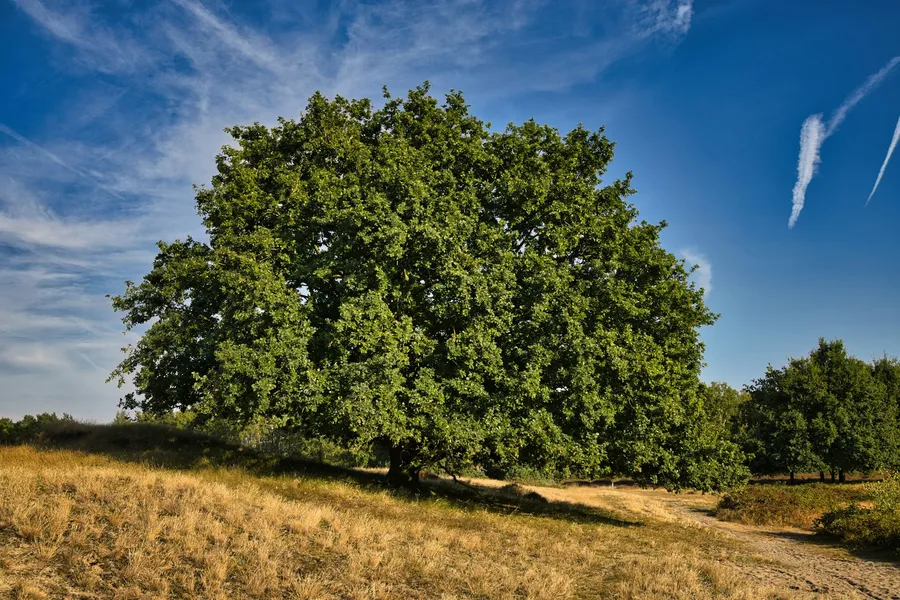
Maryland recognizes White Oak as its official state tree. This deciduous hardwood grows 80 to 100 feet tall in Maryland forests, though exceptional specimens can exceed 100 feet. The trunk develops a massive girth, commonly reaching three to four feet in diameter on mature trees. Some of Maryland's oldest white oaks measure over six feet across. The tree's strong wood and stately appearance made it Maryland's most valuable timber species during colonial times and the early republic. White oak lumber built Maryland homes, barns, and ships for over three centuries.
The bark appears light gray with a scaly, plated texture. Shallow vertical furrows separate flat ridges across the trunk surface. The bark becomes deeply furrowed on very old trees but never develops the deep, dark furrows of black oak species. The leaves grow four to nine inches long with seven to nine rounded lobes. The lobes have smooth edges without bristle tips, distinguishing white oak from red oak group species. Leaves emerge pinkish-red in spring, turn deep green in summer, and fade to brown or burgundy in fall.
White oak grows throughout Maryland from the coastal plain to the Appalachian mountains. The species thrives on well-drained upland sites with deep soils. Maryland's white oaks form the dominant tree in many forest types, often growing alongside hickories, red oaks, and tulip trees. The tree produces acorns annually, though heavy crops occur every four to ten years. These acorns provide critical food for Maryland wildlife including deer, turkeys, squirrels, and black bears. White oak acorns mature in a single season, unlike red oak acorns that require two years.
Maryland State Tree Name
The common name White Oak comes from the pale gray bark and light-colored wood. The scientific name Quercus alba uses the Latin word for oak (Quercus) and the Latin word for white (alba). Early Maryland colonists called these trees stave oak because the wood split cleanly for making barrel staves. Shipbuilders used the term navy oak for the strongest white oak timber.
The name distinguishes this species from red oak group members that have darker bark and bitter acorns. White oak belongs to the white oak group within the genus Quercus. This group includes about 20 North American oak species with rounded leaf lobes and sweet acorns. Maryland's white oak is the most widespread and economically important member of this group. The species belongs to the Fagaceae family, the beech family.
Why White Oak Became the Maryland State Tree
Maryland established the White Oak as its official state tree on April 10, 1941. The Maryland General Assembly passed legislation recognizing the species during the 1941 session. Governor Herbert O'Conor signed the bill designating white oak as Maryland's arboreal emblem. The selection honored a tree central to Maryland's historical development and continued forest resources.
Maryland picked white oak for its crucial role in the state's shipbuilding heritage. During colonial times and the early 1800s, Maryland shipyards built vessels using white oak for frames, keels, and planking. The wood's strength and natural resistance to decay made it ideal for ship construction. Baltimore shipyards constructed some of America's most famous vessels from Maryland white oak, including the privateer Chasseur and multiple U.S. Navy frigates. The USS Constellation, launched from Baltimore in 1797, used Maryland white oak throughout its frame and planking.
The tree held enormous economic value beyond shipbuilding. Maryland farmers split white oak into fence rails that lasted decades without rotting. Coopers made barrels from white oak for storing Maryland tobacco, flour, and whiskey - the wood's tight grain prevented leaks. White oak provided flooring and structural timbers for Maryland buildings including the State House in Annapolis. The tree's acorns fattened hogs that fed Maryland families. This combination of shipbuilding importance and practical versatility made white oak the logical choice when Maryland designated its state tree. The species represented Maryland's colonial economy and continued to thrive in state forests.
Maryland State Tree Facts
Fact 1 of 8
Maryland designated White Oak as state tree on April 10, 1941, through legislation signed by Governor Herbert O'Conor
Maryland State Tree and Flower
Maryland's state flower is the Black-eyed Susan (Rudbera hirta), designated in 1918. The state adopted its floral symbol more than two decades before choosing the white oak. Both the White Oak and Black-eyed Susan grow naturally throughout Maryland. The towering oak dominates Maryland forests while black-eyed susans bloom in meadows and roadsides. White oak leaves emerge in spring when black-eyed susans begin their growth cycle. By summer, the oak's deep green canopy shades Maryland forests as bright yellow black-eyed susans color open areas. Together these symbols represent Maryland's wooded and open landscapes.
State Tree
White Oak
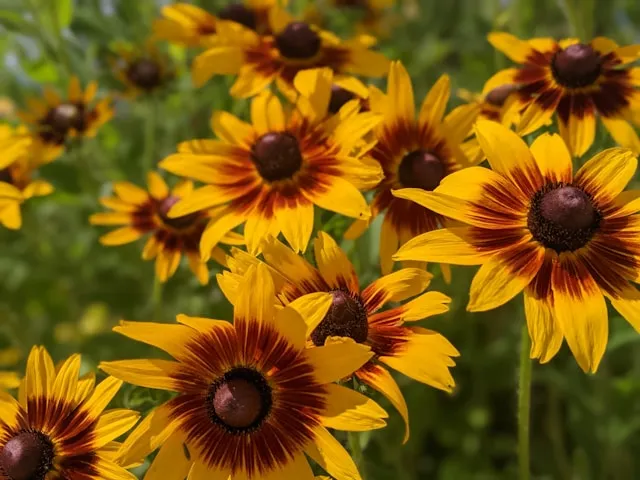
State Flower
Black-eyed Susan
Learn more →
Both are official state symbols of Maryland.
How to Recognize a Maryland White Oak
Examine the leaf lobes for the clearest identification. White oak leaves have seven to nine rounded lobes with smooth edges. The lobes create deep indentations that nearly reach the midrib. No bristle tips appear on the lobe ends - this immediately distinguishes white oak from red oak group species that have pointed, bristle-tipped lobes. The leaves feel slightly leathery. On mature trees, leaves typically grow four to seven inches long, though some reach nine inches.
The bark shows a distinctive light gray color that stands out in Maryland forests. The surface consists of narrow, vertical plates separated by shallow furrows. The plates appear loosely attached and somewhat scaly. Young white oak bark starts smooth and light-colored, gradually developing the plated texture as the tree ages. The light gray bark color persists throughout the tree's life, unlike darker-barked oaks. This pale bark gives the species its common name and helps identify white oak from a distance.
Mature white oaks develop a broad, rounded crown with massive horizontal limbs. The trunk remains straight for 20 to 40 feet before branching. Major limbs can measure two feet in diameter and extend outward horizontally. The crown spreads 60 to 80 feet wide on open-grown trees. Forest-grown specimens develop narrower crowns with the trunk extending higher before branching. Acorns measure three-quarters to one inch long with a shallow, warty cap covering one-quarter of the nut. The acorns mature to brown in fall and drop during September and October.
What the Maryland State Tree Symbolizes
White Oak symbolizes strength, endurance, and Maryland's maritime heritage. The tree's role in building Baltimore's ships connects modern Maryland to its seafaring past. The wood's longevity represents lasting values and solid foundations. For many Marylanders, white oak evokes the state's colonial history and the forests that supported early settlements. The famous Wye Oak, which stood for over 400 years before falling in 2002, became an icon of Maryland's natural heritage. Its offspring now grow across Maryland, continuing the legacy. The white oak's presence in Maryland forests today links residents to the same woodlands that supplied colonial shipyards and pioneer communities.
Test Your Knowledge
Can you identify state flags? Challenge yourself with our interactive quiz!
Sources & References
This article has been researched using authoritative sources to ensure accuracy and reliability. All information has been fact-checked and verified against official government records and forestry databases.
Official source for Maryland state symbols and legislation • Accessed: January 15, 2026
Information about Maryland's forests and wildlife • Accessed: January 15, 2026
Educational resources about Maryland trees and forestry • Accessed: January 15, 2026
Accuracy Commitment: We strive to maintain accurate and up-to-date information. If you notice any errors or outdated information, please contact us.